The Case for Skilled Volunteering: Five Ways UK Professionals Can Put Their Day Job to Work for Good
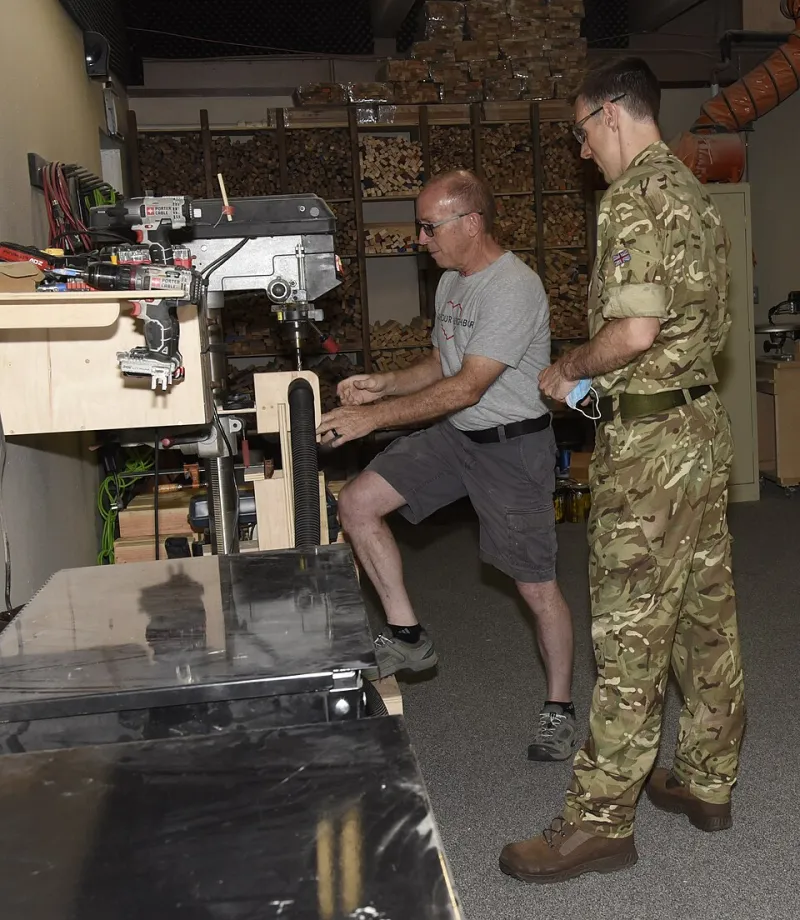
Photo: Foreign and Commonwealth Office, OGL v1.0, via Wikimedia Commons
Cash donations remain the most efficient way most UK supporters can help in a crisis. They allow aid organisations to buy what is needed, where it is needed, rather than shipping guesswork across borders. But there is another currency that UK professionals can offer: the skills they use every working day. Accounting, law, translation, IT and project management are not peripheral to humanitarian work. They are part of how good intentions become accountable action.
This is an opinion piece, so let me state the argument plainly. Weekend volunteering is valuable, but it is not the only way to contribute. Skilled volunteering allows a nurse, a bookkeeper, a translator or a cybersecurity analyst to add capacity in the areas where humanitarian organisations are often stretched. It does not replace paid local staff. It supplements them, and it should be designed with that distinction in mind.
At Aid for People, we match professional volunteers with specific needs rather than inviting people to invent a role from scratch. That matters. A volunteer who arrives with enthusiasm but no agreed task can create more work than they absorb. A volunteer who arrives with a clear brief, a realistic time commitment and a named staff contact can be genuinely useful. Below are five routes, with honest time expectations and short examples of the difference they can make.
1. Finance and accounting
Charities need the same financial discipline as any other organisation: management accounts, budget monitoring, stock reconciliations and audit preparation. A qualified accountant can review monthly reports, help a local partner tighten its bookkeeping or advise on cash controls in a response where large sums move quickly. The work is rarely glamorous, but it protects resources and builds trust with donors.
A realistic commitment is four to eight hours a month for at least six months, usually remote. Some roles may require a short induction on charity finance and donor reporting. UK volunteers should be clear that they are advising, not replacing a local finance officer. Confidentiality and data protection are essential.
Impact story: one finance volunteer worked with a partner organisation to reconcile stock records after a rapid winterisation distribution. The exercise identified duplicate entries and helped the partner account for blankets more accurately. That may sound mundane, but accurate stock records are part of how a charity proves that donations became supplies rather than losses.
2. Legal and governance advice
Humanitarian organisations operate in a thicket of contracts, data protection rules, safeguarding policies and charity law. A solicitor or governance professional can review supplier agreements, help draft consent forms or advise on the legal boundaries of a partnership. This is not about giving free legal representation to individuals; it is about strengthening the organisation’s systems.
A realistic commitment is ten to twenty hours for a defined project, such as a contract review or a policy refresh, rather than an open-ended retainer. Remote work is common. Volunteers need professional indemnity arrangements or clear supervision, and they must understand the limits of their role. Legal advice in a crisis can be urgent, but it still needs proper boundaries.
Impact story: a volunteer lawyer reviewed a supplier contract for a local partner and identified a payment clause that exposed the partner to unnecessary risk. The clause was renegotiated before goods were ordered. The value was not only in the legal point; it was in helping a smaller organisation negotiate with more confidence.
3. Translation and interpreting
Translation is one of the most practical skills a volunteer can offer. Safeguarding materials, complaint forms, distribution instructions and feedback surveys all need to be understood by the people they are meant to serve. A professional translator can turn dense English into clear, culturally appropriate language. An interpreter can support remote case discussions or training sessions.
A realistic commitment varies widely: two to five hours a week for ongoing translation, or a few hours per assignment for interpreting. Remote options are common, but not every language need can be met remotely. Volunteers should be professionally competent, not simply fluent. Confidentiality is critical, especially where personal safety or sensitive case details are involved.
Impact story: a volunteer translated a feedback form into a language spoken by a displaced community. The form had previously been available only in English and one other language, which limited who could respond. The translation increased the number of replies and gave programme staff a clearer picture of whether distributions were reaching the people who needed them most.
4. IT and cybersecurity support
Humanitarian data is sensitive. Email accounts, beneficiary lists, payment systems and mobile devices all need protection. An IT professional can help a small partner set up secure backups, review password policies, train staff on phishing or advise on safe data storage. The work does not require a large corporate budget, but it does require someone who understands risk.
A realistic commitment is three to six hours a month, often remote, with occasional project bursts. Volunteers should expect to work within the organisation’s existing systems rather than imposing an expensive new platform. Safeguarding and data protection training are usually required before access is granted.
Impact story: a volunteer helped a partner organisation introduce multi-factor authentication and a simple phishing awareness session. A few weeks later, staff reported a suspicious email rather than clicking it. The incident was contained. That is the kind of quiet outcome that rarely makes a fundraising appeal, but it protects the people whose data the organisation holds.
5. Project management and logistics planning
Humanitarian responses live or die on coordination. A project manager can help a partner map tasks, set realistic timelines, track risks and improve reporting. A logistics professional can advise on warehouse layout, stock rotation or distribution planning. These skills are especially useful when a local organisation is growing quickly or managing a complex winterisation programme.
A realistic commitment is five to ten hours a month for a defined project, with remote planning calls and occasional site visits where appropriate. Volunteers should be careful not to import private-sector assumptions wholesale. A distribution plan that works in a UK warehouse may not work in a camp with unpaved roads and limited storage.
Impact story: a volunteer project manager helped a partner create a simple tracker for blanket orders, deliveries and distribution dates. The tracker revealed that one district was likely to receive stock later than planned. The partner rearranged transport before the delay became a crisis. The fix was not heroic; it was good planning.
How matching works
Aid for People does not simply ask volunteers to send a CV and wait. We start with a conversation about skills, availability, supervision and boundaries. We then match that profile to a specific need identified by a programme or partner team. Volunteers receive a brief, a named contact and an induction. We ask for references where appropriate and require agreement to confidentiality, safeguarding and data protection policies.
Not every offer can be used immediately. A volunteer with specialist expertise may wait for the right task, and that can be frustrating. The alternative is worse: creating work to keep a volunteer busy. Skilled volunteering should be demand-led, not supply-led.
The wider point is that compassion takes many forms. A direct debit is one form. A carefully reviewed contract, a translated feedback form or a secure email system is another. For UK professionals who want to contribute beyond cash, the day job can be a force for good, provided it is offered with humility, boundaries and a realistic sense of what humanitarian work actually needs.